The right wing media is furious though. Social media is flooded with posts pointing out how everyone else deserves a break too, poor people need more help than anyone making $125,000 per year, and it’s unfair to treat people who willingly took on loans as victims. As is always the case in American media, everyone is talking about the wrong things, which is distracting from the real issues and therefore enabling them, guarantying the problem will continue.
Everyone knows the price of college tuition skyrockets every year for no other reason than colleges can get away with extorting their customers. One of the main reasons they get away with this is they know it doesn’t matter if their students can afford tuition. As long as students can get a loan, the school will get their money, and whatever happens after that isn’t the their problem.
Imagine if the government came out and said, “We realize you need a car to get to work, and the price of cars has risen 1,000% in your lifetime. So we’re going to give everyone who currently has a car loan $1,000. You’re welcome.” Anyone with a car note would say, “Sure, I guess. Thanks for barely nothing.” Anyone without a loan would say, “Fuck you too.” They would both be right, but arguing about the details misses the point. The real issue is the extortionate increase in the price of cars. If the government simply stopped car companies from being able to overcharge their customers, they could fix the problem for free.
The second half of the real problem is the interest rates on student loans. Imagine if you bought a car for $10,000 because you needed it to get to work. Then you paid $100 every month for a year, and at the end of the year your loan balance was $10,000. Then the president of the United States comes out and says, “Don’t worry. I’ll save you by making tax payers give your predatory lender $100!”
An actual person’s student loan balance
Millennials wouldn’t be crippled by a lifetime of student loan debt if the interest rate was zero, and since student loans are the only debt that can’t be eliminated by filing for bankruptcy, I believe that would be a fair trade.
Anyone who is pissed off that it’s unfair for college debtors to get free relief shouldn’t be focusing their arguments on that one myopic point. They should be pointing out that the government could give students more help for free by simply eliminating interest rates, or at least cutting them in half. The only people who lose in that scenario are the ultra rich assholes who created the problem.
If we’re going to scream about how something is unfair, we should be screaming about the fact that the government’s only solution to students being exploited by financial institutions is to give huge lump sums of free tax payer money to the exact same bankers who created the problem to begin with. This is exactly how the government dealt with the 2008 housing market crash:
Step 1: Financial institutions bankrupt consumers by overcharging them. Step 2: Consumers can’t pay off their loans, which means the banks become in danger of going bankrupt. Step 3: The government gives the banks free tax payer money. Step 4: The CEOs of those companies buy mansions, yachts, cocaine, and hookers with that money. Step 5: The consumer never stops living paycheck to paycheck.
So, yes, I’m completely against giving those vultures more money. I want students to have debt relief, but I want them to get it at no cost to the tax payer by simply preventing colleges and lending institutions from gouging their customers.
In 2009, Hillary Clinton installed an E-mail server in her home, which she used to conduct government business. After a series of hacks and leaks, the FBI and the State Department investigated her unsecure server. They identified hundreds of E-mails containing classified information, and it’s fair to say they would have found more if Hillary hadn’t hastily deleted 33,000 E-mails. Every agency that investigated her agreed she was “careless” and “negligent” in handling classified information but refused to bring charges against her.
When Hillary ran for president in 2016, her opponent, Donald Trump, relentlessly reminded voters about the controversy and encouraged his fans to chant, “Lock her up. Lock her up.” The E-mail scandal played a significant role in Trump defeating Hillary in the 2016 election to become the 45th president of the United States.
After leaving office in 2020, Trump took hundreds of classified documents home with him from the White House. In 2021, The National Archives and Records Administration noticed they didn’t have certain items from Trump’s tenure that they’d expected. So they requested he turn over any classified he may have kept. Trump’s lawyers sent back 15 boxes and promised he didn’t have anything else. However, the FBI found evidence that Trump was still in possession of more. So they sent agents to search his home, where they found 26 additional boxes of confidential, secret, and top secret documents.
Now history is repeating itself. Government agencies are debating whether Trump’s actions were deliberate, if they warrant prosecution, and if criminal charges are even possible due to their unprecedented nature. The right wing media is saying this is a witch hunt and making every excuse imaginable to defend Trump while the left wing media is acting like all we can do is wait and see what the lawyers decide. They’ve all missed the point… again.
My perspective comes from the fact that I served in the U.S. Air Force from 2000 to 2007, and I had a top secret security clearance. Anyone who has worked in a top secret environment can tell you that the vast majority of classified information is boring. Even the culture in a top secret environment is dull by design. You’re not supposed to have fun, or be creative or expressive. When you walk into a secure area, everything is as serious as a heart attack.
My first supervisor explained it to me like this, “When something is marked ‘top secret,’ it doesn’t matter how mundane the actual information is. You treat it as if it contains the exact time and location where the president is going to be, and any unauthorized person who sees it is an assassin who will use that info to murder the president. It doesn’t matter if the information fell into the wrong hands because you were negligent or malevolent. Your actions killed the president. That’s all that matters. You see, ‘top secret’ doesn’t just mean ‘really important.’ It means, ‘no mistakes, no excuses, no mercy.'”
I recently saw a Tweet that summed it up another way. It said, “Top secret info is like child porn. If it’s in your house, you’re going to jail.”
For enlisted personnel, there’s no gray area when it comes to handling classified information. You either follow the rules to perfection, or you get the book thrown at you. On the off-chance you miraculously don’t go to jail for mishandling sensitive material, at the very least you’ll lose your job and your security clearance and never be able to work anywhere near classified information again.
It’s worth noting that Hillary Clinton and Donald Trump didn’t just mishandle information that could compromise a single mission or a military base in the middle of nowhere. They failed to safeguard information related to the highest levels of national security… your security. If they were anyone else, they would have been arrested the moment the FBI found their unsecured documents. The only debate would have been about how long they’d spend in prison.
The only question news pundits should be asking in response to the Hillary/Trump saga is why politicians with the highest responsibility to national security are held to the lowest standard of accountability.
In 2005 I was enlisted in the U.S. Air Force and stationed at Sembach Air Force Base, Germany. The experience was culturally amazing and freezing cold.
Halfway through my two-year tour, my supervisor informed me I’d been selected to receive an all expense paid trip to the largest beach in the world. That was his way of telling me I was getting deployed to Ali Al Salem Air Force Base in Kuwait.
Part of me was relieved to escape Germany’s endless subzero winter nights, but the other part of me was equally dissatisfied with Kuwait’s perpetual 120 degree sand storms. I guess I’m just a spoiled American like that. In retrospect, both experiences were adventures, but I wouldn’t want to spend the rest of my life in either scenario.
I’m confessing these emotions so you’ll understand how euphoric I felt when I was sitting at my desk in Kuwait and got an E-mail informing me that my next duty station would be at Hickam Air Force Base, Hawaii.
I re-read that E-mail 20 times before I believed it was real. Then, I printed out 20 copies and laid one on every person’s desk I worked with to rub it in their faces that God anointed me with orders to paradise.
For the next few months in Kuwait, and for the rest of my tour in Germany, I fantasized about my upcoming life in Hawaii. I imagined grass huts, luau festivals, surfing, cocktails served in hollowed out pineapples, and sex on the beach. God, I couldn’t wait!
These visions were reinforced when I finally arrived in Hawaii, inprocessed into my new squadron, and learned that I would be given a $1,200 per month housing allowance (in addition to my regular salary) to rent a home.
However, reality shattered all those dreams the moment I started house-hunting.
While I was still living in Germany, I invited my identical twin brother to come live with me. Then, when I got orders to Hawaii, it went without saying he would follow me there. So I needed to find a two-bedroom apartment. However, in 2006, the only city in Oahu I could find a two-bedroom apartment for $1,200 per month was Waipahu.
When you imagine Hawaii, you probably conjure up all the same heavenly tropes I did. In reality, Oahu is overpopulated and mostly covered in suburban sprawl and traffic jams.
When I describe Oahu to people, I say, “Imagine if you cut out New York City and put it on an island in the middle of the Pacific Ocean and declared it to be paradise because it’s on an island where the average temperature is 83 degrees.” This analogy is admittedly over-dramatic, but it’s close enough to the truth to be useful.
There are some places on Oahu that can be legitimately considered paradise, but it costs $2000+ per month to live in those gentrified neighborhoods. Waipahu is a straight up ghetto. The whole time I lived there, I never dared to walk down the street after dark because it went without saying that I would get stabbed and robbed.
After leaving Hawaii in 2007, every time I’ve encountered people who lived there, when I tell them I lived in Waipahu, they cringe and ask, “Why the HELL did you live THERE?”
Well, why does anyone live in any ghetto? Because it’s affordable.
The apartment complex I lived in was protected by 8-foot-tall fences and gates that required a key FOB to enter or exit. Plus, there was a guard stationed at the entrance who would ask to see your resident I.D. card during business hours before letting you enter.
One night, I drove up to the front gate in my $2000 convertable Miada and was stopped by a 350+ pound, drunk Hawaiian pretending to be a security guard (even though he wasn’t wearing any kind of uniform). He was obviously friends with the gate guard, who was sitting in the guard shack laughing his ass off and obviously drunk as well. Being a scrawny tech nerd at the time, I had to endure the Hawaiian giant’s abuse of power and tell him whatever he wanted to hear while my ex-wife sat in the passenger seat and judged me for being a submissive beta male. That’s just the kind of place Waipahu is. As they say in the islands, “Might makes right.”
One lazy Sunday morning, I was sleeping in my king-sized bed with my ex-wife. A few feet away, my twin brother was sleeping off his nightly hang-over in his room. Around 9:30 AM, we were all awakened by the sound of semi-automatic gun fire directly outside our apartment followed by a man screaming, “JOHN! JOHN! YOU FUCKING MOTHER FUCKER! COME OUT HERE, JOHN! I’LL FUCKING KILL YOU!”
BANG BANG BANG
Even though I’d been stationed in a war zone, I’d never seen combat. I also didn’t own a gun. However, I knew enough about these things to know that when bullets start flying, your best survival strategy is to lay down flat on the ground. So, as soon as everyone in my house jumped out of their beds and started running around like chickens with their heads cut off, I used my most authoritarian voice and ordered everyone to hit the deck and stay there.
I plastered my face to the carpet and dragged my ex-wife next to me, but my brother ran straight to the window to see what was happening. Despite my vociferous advice, he stood there, fixed to the glass, giving us a play-by-play narrative:
“Oh shit! There’s a big, fat, Hawaiian guy out there with a fucking Ak-47! Oh man! He’s going door to door, knocking on them with the but of the gun and asking random people if John lives there. Oh, shit. He’s knocking on Koa’s door. He’s not going to find John there. Uh, now they’re talking. Now they’re shaking hands. Koa’s going back inside and shutting the door. It looks like they’re all good. Now he’s pacing around aimlessly.”
BANG BANG BANG.
Then we could all hear Mr. AK-47 shout, “JOHN, WHERE THE FUCK ARE YOU!!!!?? I’LL FUCKING KILL YOU, YOU MOTHER FUCKER!!! YOU RAPED MY FUCKING SISTER!!!!”
BANG BANG BANG BANG BANG BANG BANG
Obviously, someone (possibly) from my apartment complex named John raped this guy’s sister, and he came to murder him at 9:30 AM on a Sunday, but since he didn’t know where John lived, he had to go door to door asking everyone if they wanted to volunteer to be murdered for raping his sister.
After the next gun shot, my ex crawled to her side of the bed, grabbed her phone off the night stand, and dialed 911.
Her conversation went something like this:
“Hello.”
“911, what is your emergency?”
“There’s a man outside my apartment firing an AK-47 in the air. He keeps shouting that he’s looking for a man named John who raped his sister.”
“Can you describe the man?”
“He’s large. He’s Hawaiian, and he’s carrying an AK-47.”
“Ma’am. I need more details than that.”
“I can’t tell you anything more because I’m laying flat on the floor so I won’t get shot by a stray bullet.”
“Then how do you know the suspect is Hawaiian or that he has an AK-47?”
“Because my husband’s brother is standing at the window looking at him.”
“Well, ma’am. That’s just not enough information for me to go on.”
“I’m sorry, but I’m not giong to get up and go look at him.”
“Ma’am, I can’t help you if you can’t give me a better description of the suspect.”
“Uhhh…. can you just send someone to our apartment complex and look for the guy shooting an AK-47?”
“Ugh. I guess we’ll send someone.” Click.
My ex looked at her phone in amazement and said, “I can’t believe that just happened. She literally said, ‘I guesswe’ll send someone.'”
For the next 15 minutes, we waited on our bellies while my brother watched the meth head circle the courtyard and interrogate any tenet who opened their door when he knocked. We were holding our breath hoping he wouldn’t make it to ours when finally two Hawaiian police officers drove up and asked him to surrender. He immediately gave up his gun without resisting and allowed himself to be put in the back of the squad car.
When it was safe, all my neighbors and I came outside and started talking. It turns out the gunfire and shouting had woken up everyone, and we had all called 911.
A few minutes later, one of the cops walked up to us and asked who called the police. We all raised our hands, and then he told us, “We need each of you to come to the squad car and look in the window so you can positively I.D. the suspect.”
My outspoken Mexican neighbor told him what we were all thinking, “Hell no! I’m not going near him. I don’t want that crazy meth head to know my face so he can come back and shoot me!” The rest of us shook our heads in agreement.
The officer retorted condescendingly, “Then how can we know we have the right person?”
My neighbor replied, “You found the guy who was walking around with an AK-47, right!? So why do you need anyone to identify him?”
The officer scowled and said, “I guess we’ll take him in anyway,” then walked away.
Everyone stood there looking confused, hurt, and angry. After that, life went on, and we never heard anything else about the Sunday morning AK-47 avenger or John the rapist. We never found out if either of them ever got the punishment they deserved.
It goes without saying, I hope John was brought to justice eventually. Part of me suspects the police officers who arrested Mr. AK-47 just dropped him off at his house without booking him, and given the circumstances, part of me wouldn’t fault them too much. However, we can all agree that shooting an AK-47 in the air in a densely populated urban area is bad. I hope at least they took his rifle away. In addition, I hope he got the drug abuse intervention he needed. I don’t know for a fact he was an addict, but I’m pretty confident you don’t go wandering around an unfamiliar apartment complex at 9:30 AM on a Sunday morning firing an AK-47 indiscriminately into the air unless you have a meth problem.
Epilogue:
A few years later I left the Air Force and moved back to Texas. I told this story to an old hometown friend of mine and ended it by asking rhetorically, “Where does someone even get an AK-47 from in the first place!?!? Hahaaaaa! AmIright!?!?”
He didn’t laugh at the punchline at all though. He just looked me dead in the eye and said matter-of-factly, “Dude, if you have $300, I know where you can get an AK-47 right now.”
In May of 2020, Black Lives Matter/George Floyd protests swept across America and even spilled over into other countries. The purpose of the protests was to condemn and end systemic racism against African Americans. Activists would probably still be marching in the streets, but a surge in coronavirus cases has forced everyone back into semi-quarantine. However, the issue is still dominating news feeds on social media.
This is probably for the best, because the movement hasn’t settled on a specific set of actionable demands how it wants to end systemic racism. A few suggestions have been floated, but I haven’t seen any strong actions taken to bring them into law.
Since the major protests stopped, most of the changes we’ve seen have been superficial and cultural in nature. They may make people feel better, and some of them may be necessary, but they don’t fundamentally change the way America works. For example, dozens of statues connected to slavery have been removed from public spaces. A few people have been fired from their jobs because they said, “All lives Matter.” One woman was shot for saying “All lives matter.” The Washington Red Skins promised to change the name of their football team, and many companies and government agencies are hiring “diversity trainers” to give seminars to their employees to show that they did something to combat racism.
Arguably, the end goal of the SJW movement is for white people to apologize and make amends for their inherent degeneracy every day, in every room, in every situation. I predict that if America continues down this path, it will make racism worse for several reasons and will ultimately result in more race riots until we address the true cause of systemic inequality in America.
I once met an ex-white supremacist, and I asked him to give me his old recruitment speech because I wanted to understand how those people thought. He hesitated but agreed and then began reciting statistics about crime rates and how minorities take jobs and lower property values, etc., etc. All of his arguments revolved around economics, which makes sense because the primary target of white supremacy recruitment is poor, disenfranchised white people. Basically, he was saying, “‘You’re’ poor and out of luck because minorities took your opportunities.”
Ironically, he was making many of the same arguments social justice warriors preach to blacks for why they should hate whites. Poor people hate that they’re poor, and they need a solution. Then someone comes along and says, “All you have to do is hate someone with a different skin color.” That’s a one-point solution to a one-point problem that’s easy for poor people to wrap their head around.
His recruitment speech didn’t convince me to become a white supremacist for the same reason social justice warriors’ propaganda shouldn’t convince anyone to become a black supremacist. The fundamental problem with the economy isn’t that other-colored people are taking all the jobs. The problem is that rich people underpay and overcharge poor people.
Even if every single white person in America lined up, took 50 lashes from a whip, and promised to hate themselves for the rest of their lives, it wouldn’t put a single piece of bread on a black person’s table. That’s never going to happen anyway. In a best case scenario, you might convince every upper middle class white person who lives in an predominantly white neighborhood that they’re the root of all evil, but that message will never resonate with all the unskilled white laborers who can’t afford to put food on their family’s table.
Telling them they’re the enemy is either going to turn them into one or motivate them to check out of the conversation. Furthermore, telling all black people that they’re victims in a perpetual race war will inevitably stoke their anger to the point where some of them will feel the need fight back with violence. This approach can only increase racial tensions from both ends of the spectrum.
However, if you ended poverty, then legitimate white supremacists wouldn’t have any talking points left to recruit new members with. Black people wouldn’t feel victimized and alienated, and every other person of color who isn’t represented in the phrase, “Blacks Lives Matter” will have equal access to a meaningful, fulfilling life.
Until you end poverty for everyone, all your virtue signaling will ultimately just distract from the true source of racial tension and thus enable it.
In 2006 I was stationed in Hawaii in the U.S. Air Force. The first day I arrived on Oahu, I met the woman who would become my first and only ex wife. About a year and a half later, one evening, I was extremely drunk in that overly emotional kind of way where you hang onto your friend’s shoulder shouting, “I love you, bro.” In that state of mind, I slurred to her, “Baby, I’lllll take youze anywhere in the worlddd you wanna go. Just name the place, and I’ll fly you there.”
Lucidly, she snapped back, “Okay. I want to go to Vietnam, Cambodia, and Thailand.”
Wait. What?
“Fuck,” I thought. “That’s not exactly what I meant…. But, oh well. Screw it.” A month later, I’d filed my request for three weeks of leave and booked a guided tour across Asia through a travel agency at Hickam Air Force Base.
I’d already spent four years living in Europe, where I would often just drive in a random direction Friday afternoon, stop in a town that looked interesting, and sleep in my car. So I was no amateur when it came to traveling, but I didn’t know anything about Asia. So I decided I should have someone walk me through my first experience.
The big day finally came, and we boarded a plane heading West towards “The East.”
Even though everyone told me I was crazy for going to Thailand with my committed partner, we flew to Bangkok together anyway, where, despite my best intentions, my story would still involve dozens of lady boys.
When we landed, we were met by a tour guide at the airport holding a sign with my last name written on it, just like in the movies, which made me feel like a celebrity. He drove us to a gigantic five star hotel… in the deepest, darkest bowels of Bangkok. Our room was on the 15th floor with an amazing view of the air conditioning units on the building next-door. Everything else about the place was high class beyond the status I was accustomed to.
Over the next week, our tour guide drove us around the city to all the biggest tourist traps. We visited a 5-story flea market with more exotic, shiny knick knacks than you could fill a thousand shipping containers with. We paid monks to see a golden Buddha statue worth enough money to end poverty, and then we fed a ravenous horde of catfish from a shaky skiff on a greasy river. It was all very exotic, opulent, and tinged with signs of poverty.
As our guide shuttled us around the city, we bombarded him with every question imaginable about Thailand’s history, current events, and all things sociological, political, economic, and anthropological. I could tell he genuinely enjoyed the fact that we wanted to know all of Thailand’s deepest truths, and I felt like we bonded over that.
Everyday, when we took the elevator down from our hotel room to meet our guide, we’d walk past a giant marquee sign in the hotel lobby that read, “Cabaret” in big Broadway light bulbs. Underneath the sign was a 15-foot-wide set of stairs leading down to a basement auditorium.
We couldn’t not be intrigued. So one day, we asked the front desk clerk how much the cabaret show cost, and she said, “$150 U.S. dollars per person.”
My initial reaction (in my head) was, “Yeah, fuck that.” However, we were on vacation.
The next morning, I asked our tour guide if he knew anything about the show and if it was worth the obscene price. Immediately, his eyes lit up, and he assured us it was fantastic and absolutely worth every penny. He endorsed the show so enthusiastically I decided to splurge on it against my better judgement.
The last night we were in Thailand, we bought tickets to the 11pm showing. After having a few warm up drinks in our hotel room, we made our way downstairs. I expected to walk into a cramped, seedy basement, but the stage and stadium seating were bigger than the auditorium in my high school. The light and sound systems must have cost hundreds of thousands of dollars. It was almost as impressive as the Moulin Rouge!
When we entered, a sharply dressed bellhop met us and led us to our seats. At that point, I was feeling guilty for arriving under-dressed for such a formal occasion, but I got over that with a little more liquid courage. As soon as we sat down, a waitress came by and sold us some overpriced beer and wine. Properly prepared, we settled in for a night we’d never forget.
Halfway through my first beer, the overhead lights dimmed. A spotlight cracked on, illuminating a thin, middle aged Thai man wearing high heels, panty hose, panties, and a tasteful black corset. If you need a visual image, he basically looked like A Thai version of Tim Curry from The Rocky Horror Picture Show.
…and that’s… interesting. Hey, I traveled all the way to Thailand for a cultural experience, and I was getting exactly that. So I was rolling with it.
Honestly, at first I was shocked, but then I was like, “Okay. What do you got for us, Tim?”
Well, for the next two hours, in his adorably broken English, “Tim” introduced us to a parade of transvestites in various stages of the transition process who all regaled us by lip-singing American pop songs that you would have heard in an American strip club circa 2007.
The whole time I remember thinking, “GOD DAMN IT! I DIDN’T COME ALL THE WAY TO THAILAND TO LISTEN TO AMERICAN POP MUSIC!”
In between acts, a chorus line of big-booby corset-ed hot chicks (and more lingerie-clad men) would come out and do the can-can dance… or whatever.
A dozen Thai beers later, the $300+ episode of the Twilight Zone ended. Tim and his friends took a bow. The spotlight shut off, and the overhead lights came on.
Silently, my wife and I drifted upstairs to the lobby elevator. Then we took another elevator from the lobby to our suite overlooking the dingy brick wall next-door.
It was only after I brushed my teeth that I asked out loud, “What the fuck was that?”
The next morning we met our guide in front of the hotel. His assistant loaded all our luggage into the back of the van. As soon as we buckled into the back seat, he turned around and asked triumphantly, “Did you see the cabaret? How did you like it?”
I replied sheepishly, “Uh, yeah. It was interesting. I guess my only complaint is that I wish it had more hot chicks.?.?.”
He smiled as big as The Joker from the 1970’s Batman series and shouted, “HAHAAAAA!!!! They were ALL MEN!!!!!!”
Now… I’m all for respect and equality of everyone, but his intentions were malicious. That makes him the worst tour guide ever.
In retrospect though, the story was worth $300.
Still, he was the only person we didn’t tip on that trip.
I enlisted in the U.S. Air Force in the year 2000. After 6 months of training I was sent to my first duty station, Aviano Air Force Base, Italy. A year or so later, I met a wonderful, beautiful Italian girl who I nicknamed “Pulcina.”
I got a 3-day weekend pass for New Years of 2002. So Pulcina convinced me to take a nice vacation to Lake Bled in Slovenia. We rented a bed and breakfast from a polite Slovenian couple who gave us a soft bed and standard cheese and meat breakfasts.
It didn’t take long to walk all around town, visit all the tourist shops, and take a ferry to the cathedral on the island in the middle of the lake. The entire experience was majestic, but since our vacation took place in the dead of winter, we were freezing stiff the whole time.
Fortunately, while driving to and from the tourist sites, we kept passing a large hotel that advertised they had a swimming pool inside. We both knew European hotels would often allow the public to use their pool for a small fee, and we were desperate for that summer time feeling relief from the oppressive Slovenian winter. In fact, we predicted we’d have this chance and both brought bathing suits. So, on the final day of our vacation, we drove back to our hostel, picked up our swim gear, and drove to the hotel.
When we arrived at the reception desk we were told it would only cost a few Euros to use their pool area for the day. Being in Eastern Europe, that didn’t surprise us. What did, was that the hotel also offered 1 hour massages for $20.
I’d never had a massage before, but I’d always wanted one, and I knew I needed one. Since the price was irresistible, I bought one for myself and Pulcina. The front desk lady told us there was a waiting list. So we would have to go play in the swimming pool for an hour. Then, I would get my massage, and afterwards, Pulcina would get hers. Frankly, the timing was perfect.
So, after an hour, I got out of the pool, dried off, and headed to my appointment. I entered a small room, barely larger than a closet, and was greeted by the hottest 48-year old Slovenian MILF in history. She spoke to me in Slovenian, and I humbly confessed that I only spoke English. She immediately switched to speaking perfect English and made some small talk. After the pleasantries were over, she got down to business and informed me how the massage would proceed.
She told me I couldn’t wear my bathing suit on the table since it was wet from swimming. So I would have to undress before the session began. However, we were basically standing in a closet, and there wasn’t any changing room. I looked around for a place to undress, and when I brought my eyes back to the Slovenian MILF questioningly, she just stared back at me stoically. I thought to myself, “Hey this is Europe. They don’t care about nudity. I guess I’m just supposed to get naked.”
Cautiously though, I put my thumbs on the waist band of my bathing suit and motioned like I was going to push them down. As I did so, I made eye contact with the Slovenian MILF and raised my eyebrows. I could tell she understood what I was asking, and she simply stared back at me impatiently.
Comprehending the situation, I thought, “Fuck it. I’m on vacation.” Then I pulled my swim shorts down in front of her, fully exposing my manhood, which was cold from the swimming pool. Her stoic expression barely cracked with a sly grin as I hopped onto the massage table and covered myself with with the white sheet.
I didn’t get a “happy ending,” but she gave me the best massage I’ve ever had in my life, and I’ve worked as a massage therapist for the past four years. So I’ve had hundreds of massages. I compare all of them to hers, and I will never be able to replicate the perfection of her coconut-crushing hands.
After she finished fixing everything wrong with my life, I slid off the table, pulled my shorts back on while she watched, and then went back to the pool area. I informed Pulcina it was her turn. Then I melted into the hot tub as I watched her slosh towards the massage room.
After her massage was over, we packed up our stuff in the car and headed back to our bed and breakfast. As I was driving, I looked over to her in the passenger seat and asked, “How was your massage?”
“Fine.” She replied.
Casually, I added, “European massages are weird though… for an American.”
“How is that?” Pulcina asked.
I answered, “Well, you know…. the massage therapist said I had to take off my shorts since they were wet from swimming, but there wasn’t a changing room. So I had to get completely naked right in front of her while she watched. In America, we don’t just get naked in front of other people.”
Pulcina snapped her head towards me, and her eyes turned red as she screamed, “Turn this car around! I’ll keeeel herrrr! She did not tell me to take off my bathing suit at all!!!! I had more clothes on than you, and they were more wet than your shorts! That fucking beeeeetch!!!!”
I laughed all the way back to the bed and breakfast.
On May 25, 2020, a police officer in Minneapolis choked an unarmed African American man, George Floyd, to death by kneeling on his neck while arresting him for spending a fake $20 bill. Over the next week, anti-police brutality/ anti-racism riots erupted across America.
Everyone wants something to change, but very few protesters have offered any concrete demands. Overwhelmingly, the message seems to be, “Stop being bad.” This isn’t an actionable request, and it can’t lead to change.
Colorado took the logical first step of drafting new police accountability laws, but that only cuts the top off the iceberg. Systemic police brutality is the result of multiple systemic flaws in the justice system that require a diverse range of reforms.
Below is my list of changes I believe will help. As America continues to protest, I hope to see the national dialogue pivot from blind rage to focusing on brainstorming and debating solutions like these.
Criminalize deadly restraint techniques.
If George Floyd hadn’t died, there would never have been any public outcry against police officers putting their knees on civilians’ necks. While some police officers have been quick to point out that choking suspects isn’t part of any official police training, it isn’t against the law. That places it firmly in the category of “unusual but acceptable,” and therefore, a disaster waiting to happen.
If nothing else comes from the George Floyd case, the one easiest call to action is to criminalize life-threatening fighting techniques by police. I want to emphasize that I didn’t say, “train police not to choke people.” Training isn’t enough. It must be illegal to use life-threatening techniques in any situation except when the cop’s life isn’t in imminent danger. There should especially be specific rules limiting how much force police are allowed to use on people who are already in hand cuffs.
Have a third party investigate any instance of police harming suspects.
The public’s trust of police is eroded when they kill unarmed civilians, but it throws fuel on the fire when they’re let off with a slap on the wrist. It also increases the likelihood they’ll misbehave if they know their brothers will help them escape accountability.
I wasn’t able to find a good explanation of the official procedures for how police departments respond to instances of suspects being hurt and killed by officers. So I’m assuming is varies wildly between states, counties, cities, and precincts. The people who pay cops to protect them deserve a reliable nationwide standard.
Not only should the procedures for investigating cops be standardized, they should also be automatic and objective. Anytime a suspect is injured or killed by an officer, they should be investigated by a third party who can’t be inclined or coerced to “look out for their brothers.”
Set harsher punishments for police brutality.
Since the 1970’s, American politicians have instituted an avalanche of “get tough” policies that set higher punishments for crimes based on the assumption that tougher sentences will dissuade people from committing crimes. Whether this approach has succeeded is debatable, but it has definitely put a lot more Americans behind bars.
In my next point, I’m going to argue we should reverse these policies, but I might be wrong. Harsher punishments may reduce crime. If that’s the case, then shouldn’t we apply the same standard to police officers? If they’re afraid of losing their job, their retirement, their families, and the best years of their lives for hurting people, then it stands to reason they’ll be less likely to abuse their authority.
When you hear about police killing civilians, such as in the case of George Floyd, you often learn the offending officer has had a history of violence and reprimands. If police had a “three strike rule” similar to civilians, the officer who killed George Floyd would have been kicked off the force long ago.
Reduce punishment/sentencing.
It seems obvious that harsher punishments will dissuade criminals. However, this theory is predicated on the assumption that the main reason civilians don’t commit crimes is because they’re afraid of being punished. In reality, the main reason people commit crimes is because they’re desperate, and desperate circumstances lead to desperate actions.
The same applies when getting arrested. If you know you’re going to get a $100 ticket if a cop catches you with a half ounce of weed, you probably won’t fight for your life. However, if you know you’re going to go to jail for three years and set your entire life back to zero, you might be motivated to do whatever it takes to protect yourself.
“Tough on crime” laws might have prevented a few offences, but I suspect they’ve also had the effect of increasing violence against police. Thirty years of push-back against “tough” cops has taught police officers to fear civilians as much as civilians fear them. This is a vicious cycle that will always lead to bloodshed. It won’t stop until the police force softens its war on civilians.
End the war on drugs and other victimless crimes.
We’ve reached a point in America where cops approach every interaction with civilians as a potential life and death situation. Yet, they’re spending millions of hours each year terrorizing victimless criminals like pot smokers, jay walkers, and shirtless women. Cops are striking fear in the general population, building distrust, and putting themselves in harms way to prevent and punish innocuous behavior.
One of the main reasons America hasn’t acted on the advice of all the experts and evidence is because for-profit prisons have been lobbying politicians to keep laws in place that fill prison cells so they can make more money.
Money is the strongest force in the world, and as long as someone can profit from putting people in jail, you can be sure they’ll do everything they can to maintain and increase their profit margins.
The biggest losers in the prison-industrial complex are the victims wasting away in prisons that cut costs at every corner, but the police are also victims in their own way. They’re on the front lines risking their lives to protect the profits of investors and CEOs whose business model is based on human suffering. It would be in the best interest of cops and civilians alike if America ended private prisons.
End revenue collection by police departments.
Cops are sacrificial paws in rich men’s games, but they’re also directly guilty of profiting from exploiting the people they’re paid to protect. Everyone in America knows police departments aggressively raise funding through tickets, fees, and fines. For some, its their main source of revenue.
In response to ticket quotas, I don’t call police “pigs.” I call them “sharks.” They’re circling the city looking for small fish to devour, and anyone will do. They’ll shake down elderly pensioners like highway robbers as quickly as gangster street racers. Police will defend themselves by claiming, “I was just upholding the law,” but everyone knows that’s just an excuse to cover up the fact that they’re actively trying to leech as much money as they can out of their community.
Cops have no right to act surprised when the public turns against them since they turned against the public decades ago. I once heard a black comedian, whose name I can’t remember, say, “I’ve always resented the fact that whenever I see a cop, I don’t feel safer. I feel afraid.” I’m white, and I feel the exact same way. I might not fear for my life as much, but I know cops don’t drive unmarked cars because they don’t want you to see them coming to protect you. They’re out to get you, me, and our grandmothers because they need our money. How can the police ever expect the public to trust them when their job description includes enforcing extortion quotas?
If peace between civilians and police is ever to be achieved, we have to stop allowing police departments to profit from tickets, fees, and fines. Give them a set budget, and redirect all the money they bring in to the education system.
End the “go beyond the ticket” policy.
Police departments are always looking for ways to make more arrests to increase their revenue and to look good on productivity reports. This motivates them to use any interaction with suspects as an opportunity to search for more criminal offenses, like possession of contraband. On the surface, this sounds justified; they’re innocently looking for more crimes to stop. That may be true, but they’re also systematically bullying people and escalating every interaction into as dangerous of a situation as they can.
American cops are notorious for pushing the limits of their authority to coerce and trick civilians into surrendering their civil rights, or at least, to not attempt to defend themselves while the cop violates their civil rights. If you don’t believe me, try filming the next cop who pulls you over or tell him you don’t consent to any searches, and see what happens. You’ll probably end up face down on the ground being told a long list of charges you’re going to jail for.
This is a conundrum with no good answer. It would be a shame for cops to allow crimes to pass under their nose, but what is the total cost of systematically roasting every civilian who cops come in contact with? Nobody trusts the police. Everyone is afraid of them. People hiding minor offences will be motivated to defend themselves, and any situation can escalate into a fight that could end with either party being killed unnecessarily. Is that really the lesser of two evils?
Increase rehabilitation and job placement programs for convicted criminals.
Imprisoning and bankrupting criminals isn’t going to make them better citizens because destroying their lives makes makes them more desperate in the long run. This is a huge part of the reason why harsh prisons sentences have failed to lower the recidivism rate of convicts.
American prisons are notorious around the world for their inhumanity. Life inside them is basically a perpetual race war and gang recruitment center. So when you see a cop, you know that’s what they represent. They might serve and protect you sometimes, but they’re also agents of death coming to steal your soul and send you to Hell. And they wonder why nobody trusts them.
People would trust cops more, and be less likely to stay committed to a life of crime, if prisons operated more like trade schools than sweat shop torture chambers. It would probably cost tax payers less money too.
Case in point, George Floyd was arrested in 2007 for aggravated robbery with a deadly weapon and spent 5 years in prison. If the justice system had done him any service, he would have been working at a high paying, skilled job in 2020 instead of spending forged $20 bills because his two shitty jobs barely made ends meet.
Furthermore, the officer who killed George Floyd undoubtedly knew his criminal record when he had his knee on his neck. When he ran Floyd’s background check on his computer, his first reaction wasn’t, “This man has been to prison. He’s had every advantage society can provide to better himself. Why is he spending fake $20 bills?” His first reaction was more likely, “This guy has already been to prison, a ruthless place where you go in hard and come out harder. I better approach this situation with extra violence since this guy spent five years in Fight Club.”
For multiple reasons, we should only expect police to treat convicts with inhumanity as long as our prison system remains devoted to subjecting criminals to inhumanity. The solution is to redesign the prison system to help people.
Increase qualification requirements and mental health screening for police recruits.
Anytime a cop abuses their authority, their brothers’ first defense is, “That guy was just a bad apple. The rest of us are really good, honest.” But every year, we keep finding bad apples. Instead of excusing the problem at the end of unqualified cops’ careers, why don’t we weed them out during the recruitment phase?
There will always be rotten candidates who slip through the cracks or become corrupted after years of well-intentioned service. You can address that problem as soon as they establish a pattern of pathological behavior, but that comes second. Everyone knows the requirements for joining the police is basically to have a G.E.D. and be able to run three miles. We know it takes a stronger mind to endure the stresses of police work than it takes to enter the police force, and we know the power of the badge attracts power-hungry sadists.
Recruitment reform is long overdue. If we raised the bar for entry, then people wouldn’t have to keep demanding justice, and police wouldn’t have to keep making excuses about bad apples.
Design better non-lethal weapons.
I’m not an engineer. So I don’t have any specific examples of nonlethal weapons I want invented, but I do know that if cops had better nonlethal tools, they wouldn’t have to use lethal ones so often.
Give M.I.T. a $20 million grant to design new tranquilizer darts, glue guns, sleep gas, or something that will give cops less dangerous options before resorting to deadly force.
Increase body/car cameras for cops, and make it totally legal to film police.
There’s enough social media videos of police breaking the public’s trust to conclusively establish… the police have broken the public’s trust. They can make excuses all day about bad apples, job stress, and whatever else. That doesn’t change the fact that enough of them have abused the public’s trust that the line has been crossed. We can’t trust them.
A lot of cops already wear body cameras, and many police cruisers are equipped with dash cams, but the bad cops have proven this isn’t enough. Apparently, everything they do needs to be recorded. Not only do they need to bring their own recording devices, everyone should have unrestricted rights to record police behavior.
Edward Snowden already proved the government has unlimited power to spy on the public, and we’ve been told we don’t have anything to fear if we don’t have anything to hide. The same principles should be applied to the police force, who are employed by the public. As long as it’s not, then they don’t serve at our pleasure, we survive at theirs. That’s not the social contract we paid for.
Stop designing cop cars to look scary and deceptive.
My final point is as much symbolic as it is practical. For the past few decades, police cruisers have been designed increasingly menacing and deceptive.
If your local police cars don’t look like black hell hounds, they’re disguised as taxis, or have all their public service markings painted in subdued colors that are hard to spot. Cops have obviously justified this trend as a way to intimidate and catch criminals. That may be true, but it also intimidates grandmothers and deceives the entire public.
Cops can’t honestly expect citizens to respect them, when they’re parading in dystopian nightmare cars and sneaking around in fake taxis. The current design of police cars is a metaphor for their relationship with the public. They’ve become hunters more than protectors. As long as this is the tone police set for their relationship with the public, we’ll always be locked in an escalating cycle of distrust, fear, and violence from both sides.
Hopefully, these 13 points have helped show how we can’t just fix one problem to end police brutality. It’s a symptom of multiple systemic trends in the justice system that turn civilians and police into enemies in a perpetually escalating conflict. Protests and riots were always another inevitable symptom of our flawed justice system, and we’ll continue to see them until there’s comprehensive reform. But that won’t happen until protesters demand specific, actionable policy changes.
George Floyd was an African American man from Minneapolis, who was choked to death by a police officer on March 25, 2020 while arresting him for spending a forged $20 bill. His death outraged America, particularly African Americans, who staged protests in Minneapolis, which led to looting and clashes with the police. Meanwhile, social media has been flooded with debates, accusations, apologies, pleas, justifications, and general screams of frustration.
The death of George Floyd was an unnecessary and unsurprising tragedy. Watching America scramble for a call to action, I’ve noticed a typically American lack of nuance in the national dialogue. I’m not going to solve the world’s problems with my hot take on the issue, but I want to be on the right side of the conversation and try to offer the voice of reason when so many people are looking for a one-point solution to a one-point problem.
America’s police force kills over 1,000 people per year. Some of these are justified, some of them aren’t. The only time you ever hear any outrage over the subject is when a white cop kills an unarmed African American. The are two reasons for this. One, African Americans feel disproportionately targeted by systemic racism in the police force. This conclusion is drawn from the fact that African Americans make up 12% of the population but account for 26% of police killings. Two, if we’re being honest, 99% of the viral videos of police killings involve African Americans. If you get all your news from social media, you’d think they’re the only victims of police brutality.
Every year, police kill twice as many whites as blacks, almost as many Latinos, and a handful of other people.
Imagine if you were a shepherd, and you had a flock of 1000 sheep. Every year, wolves killed 50 white sheep, 25 black sheep, 24 brown sheep, and 1 spotted sheep. So you sat down and tried to figure out a way to stop the wolves from targeting black sheep. Even if you could bring the percentage of black deaths down to 10%, you’d still be left with a wolf problem.
In regards to police, if you frame the problem as a primarily race-based issue, then the logical solution is race-based sensitivity training, but no amount of cultural awareness Power Point briefings are going to end the systemic abuse of force by the police.
The root of the problem is the militarization and commodification of law enforcement that sweeps up all races in its reign of terror. The strongest evidence for this is the fact that black cops are just as likely to kill blacks as white cops.
If you sat through every training session police officers attend through their career, you’ll never hear a speech about how you’re supposed to target African Americans. You will be trained to view everyone as a threat. You’ll be instructed to “go beyond the ticket” and attempt to escalate every minor traffic stop into an excuse to search for contraband. You’ll be trained to use military grade weapons and fighting techniques. You’ll be brainwashed to uphold the law no matter how frivolous they are, and you’ll punish victimless crimes because your police station relies on funding from tickets, and the prison-industrial complex has bribed politicians to design the law to fill prison beds for the profit of publicly traded prisons.
I’m not saying the police don’t do any good, but they should expand their motto to, “serve, protect, terrorize, and profit.” As long as their mission includes terror and profit, nobody is safe. If you fix that, then you’ll save lives from every race.
Fixing law enforcement’s misguided mission and systemic culture of violence is a necessary step in ending unnecessary police killings, but there are other factors that need to be addressed.
If it’s a moral imperative that we stop black people from being killed, then we’re obligated to ask why 93% of black murder victims are killed by black people and 41% of violent crimes are committed by blacks. I’ve seen Black Lives Matter supporters say it’s racist to point out these statistic, but ignoring the problem can’t help solve it. These numbers are important, because they may help explain why police officers (including black ones) seem to be more afraid of African Americans than other races.
You don’t have to dig deep into African American arts before you find that it has its own culture of violence, which creates a perfect storm when it meets police officers’ culture of violence.
You can call me a racist for pointing out violent crime statistics and the popularity of gang culture You can get me fired from my job and kicked off social media, but tomorrow, Pizza Hut still won’t deliver pizza to the ghetto, and the police will still be vividly aware of the statistics and culture they’re walking into when they enter black neighborhoods.
The African American community is desperate to blame someone for systematically training police to fear them. While there are surely nuanced external historical, sociological, and political factors involved, it’s honestly unfair to act surprised that cops would look at ambassadors for the black community like these and extrapolate assumptions:
I’m not saying African Americans deserve to be stereotyped. I’m saying, if you’re looking for sources of stereotypes and want to protect black people from getting killed, you would accomplish more by lecturing gun-toting gangsters than random white suburbanites on the internet.
But even that won’t fix the root problem that created and sustains gangsta culture: systemic economic oppression. Desperate circumstances lead to desperate actions. If you live in a poor community with few jobs (and mostly low paying ones), then the cost-benefit analysis of committing crimes to survive rises. The more crime there is, the more important it is to protect yourself from criminals, and this equation quickly spirals into a cycle of violence.
Gangstas wouldn’t need a charismatic leader to convince them to choose jobs over crime if good jobs existed in the ghetto and the economy wasn’t designed to bankrupt the poor. Until all poor Americans have immediate access to high paying jobs and an affordable cost of living, no amount of motivational speeches are going to prevent poor people from choosing crime over non-existent opportunities in a system that sets them up for failure.
So how do you bring jobs back to the ghetto? Not by looting and burning down businesses. I’ve seen people online justify rioting by saying peaceful protests haven’t worked. So this is their only recourse. They even compared their actions to the Boston Tea Party… ignoring the fact that the Boston Tea Party led to a civil war.
The Boston Tea Party analogy would be accurate if protesters were stealthily burning police stations and nothing else. That might send a powerful message, but there can only be one response to uncontrolled looting and destruction: the police are obligated to respond with brute force. By their actions, rioters are demanding cops reciprocate violence with violence. The only possible outcome of this course of action is more immediate violence, and in the long run, more militarization of the police and distrust.
I could be wrong. Enough violence might force somebody to do something… but not without tangible, actionable demands. Nobody in power can pass a law that makes cops stop being bad. In order for the Black Lives Matter movement to be successful, it needs a clear leader with a list of actionable demands and a strategy for applying leverage in case their requests aren’t met.
Even then, there’s a word for an organization that threatens governments with lists of demands: “terrorists.” And we all know how America responds to terrorists.
There is another option though. America has a system built in place for charismatic leaders to change laws: elections. The Democratic and Republican party have both proven they only work for their campaign donors and lobbyists. If you’re not funding their careers, they don’t give a fuck about you. So I’m not suggesting voting Democrat will save the poor.
What African Americans can do though is start their own political party and put Black Lives Matter politicians directly into the system where they can literally write the laws without having to beg, coerce, bribe, or wait on anyone else. That could directly change the systemic flaws in the the police force and the economy.
For what it’s worth, that’s what I think the call to action from George Floyd’s death should be.
One of my readers recently asked me to write a blog about reducing America’s deficit. So, here you go.
Right now, America’s total debt is about $18 trillion. That numbers is calculated by adding the government’s promise to pay social security, government pensions, military pensions, health insurance trust funds, savings bonds, and a few other debt vehicles. You could spend a lifetime micromanaging all the details of the national debt. For the sake of simplicity, I’m going to focus on ways to reduce the cost of the biggest programs America is borrowing all this money to pay for.
The graph below is a little old, but the percentages haven’t changed much. It paints a clear picture of where the federal government spends the most money:
The Big Five Expenses
Medicare and Health
Healthcare is the biggest expense for the federal government as well as the leading cause of bankruptcy for individuals. I’ve already written a blog about My Theories On How To Fix Healthcare in America. In summary, they are:
Make price gouging illegal.
Nationalize the healthcare industry.
Eliminate or nationalize the health insurance industry.
Regulate and Subsidize healthcare.
If hospitals and insurance companies didn’t gouge their customers, there would be no need for the government to pay the difference between what they charge and what customers can afford. You can accomplish this one of four ways: Pass laws telling private companies what they can charge. Make the healthcare industry a branch of the government and set prices for what they charge. Nationalize the health insurance industry so the government can set what they’re willing to pay for medical procedures and put all the profit from insurance into the public coffers.
If you feel those first three options are too oppressive, you could pass laws saying what private companies can charge, and give them a small kickback from the government to make sure they still make enough profit to thrive. It sounds odd, but it would be cheaper than paying unregulated prices and insurance markups. New Zealand has had pretty good results using this system.
Another way to lower medical costs in America without touching the healthcare industry is to raise the quality standards of food and beverages to prevent health problems in the general public. If Americans stopped consuming processed food full of carcinogenic additives, soft drinks full of processed sugar, and factory farmed foods full of pesticides and hormones, then fewer people would spend their golden years in hospitals.
Social Security
For the past 60 years, Baby Boomers have been paying their parents’ and grandparents’ social security. Now, Gen X and the Millennials are paying their parents’ and grandparents’. However, young people’s low wages can’t keep up with the size of the Baby Boomer generation.
Sadly, this means there are only three possible ways to fund the Baby Boomers’ social security:
A pandemic kills enough Boomers to reduce the cost drastically.
The government finds a shady way to not pay the Boomers what they’re owed.
The government borrows trillions of dollars and passes the debt to the next generation.
None of these solutions are good, but one of them has to happen. America has already painted itself into a corner on this issue. Moving forward, there are a few things we can do to ensure we don’t get into this mess again.
First, we would need to lower the amount individuals can pay into the system so the next generation doesn’t have to pay out so much. However, this would require lowering the cost of living to ensure social security checks are enough to survive comfortably on.
The two biggest expenses for the elderly are healthcare and housing. I already discussed a few ways to lower the cost of healthcare, and I wrote another blog entitled, The Housing Market is a Crime Against Humanity.
The cost of housing is artificially inflated by the government and lending institutions through fees, interest, and taxes so that over the course of a thirty-year mortgage, the price of a property is doubled. If we fixed that system, then people could afford to own their own homes.
Another way property prices are artificially increased is by allowing individuals to buy dozens, even hundreds of rental units, creating a false scarcity that leads to housing bubbles. By limiting the amount of property people can own, we can increase the supply to poor people. If we reduce property taxes on top of that, it should be easy to afford to keep a roof over your head when you’re too old to work.
Military Spending
America spends more money on its military than the next eight biggest militaries in the world combined, and all those countries are America’s allies. So, it’s difficult to justify our military budget on the basis of national security.
An easy way to lower military spending is to simply slash its budget and let the D.O.D. figure out how to manage its resources. The first thing they’d have to do is decrease their staff size, which would have the long-term benefit of reducing the number of pensions it has to pay.
One of the main reasons the military budget is so high is because America has so many bases. I’ve had a hard time finding an exact number, but Wikipedia says there are about 5,000 total, with over 600 overseas. That figure is close enough to get the point across. The overall mission of the U.S. military isn’t to protect American land. It’s to maintain global military superiority.
I’m not implying the military is trying to take over the world. They’re just maintaining the status quo. Some would argue this is a good and necessary mission, but it’s bankrupting America, and what good is global supremacy when millions of Americans are living below the poverty line? Many Americans would benefit from changing the military’s mission to just defending against imminent attacks. There’s even a school of thought that argues America would be less likely to get attacked if its military wasn’t all over the world intimidating other countries.
Another logical place to cut military funding inside the U.S. is eliminating V.A. hospitals. I’m not suggesting we should deny veterans healthcare. I’m pointing out that the V.A. is a notoriously inefficient system. I seriously believe most of the veterans who kill themselves, reach that level of hopelessness by fighting with the V.A. in a futile attempt to get the help they need. If America fixed its regular healthcare system, we could just move all the veterans to it and subsidize their treatment cheaper than going through the V.A.
There are countless little ways the military hemorrhages money through internal fraud, waste, and abuse. Those cracks are worth filling, but they pale in comparison to the amount of money the government pays to private contracting companies for supplies and research and development. America spent over $300 billion designing the F-35 fighter jet that can barely do its job. In order to justify these costs, America will have to use its overpriced equipment, which means finding another war to fight even if one doesn’t exist. Ending, or at least, heavily regulating the military-industrial complex is an essential step the government must take to reign in military spending.
Unemployment and Poverty Assistance
According to the graph at the top of this page, poverty assistance programs make up the fourth largest slice of government expenses. I’ve seen other figures that count it as the largest expense. Some people would argue that either way, this is evidence we need to cut funding to the poor.
The best solution to poverty isn’t to let the poor suffer and die. It’s to reduce the cost of living to make assistance less necessary. It’s tragic that people will complain about spending ten cents out of every tax dollar to help the poor, but they’ll give their landlord one third of their paycheck every month without blinking an eye.
Fixing healthcare and the housing market alone will reduce the need for poverty assistance. Reducing unemployment will take more drastic measures, but it is possible. One step that would help is creating a single national job board that every business must post vacancies and hire through. This would eliminate a lot of the excuses people make for not finding work, and it would streamline employment assistance programs.
Finding a job is only part of the problem though. A bigger issue is getting to work and having access to childcare while you’re there. If we hadn’t designed our cities to require driving long distances to get anywhere, then every job would be within everyone’s reach. Fixing this would require redesigning cities, which is almost impossible, but that’s the solution. Don’t shoot the messenger. If city infrastructure were efficiently spaced and accessible, then it would be cheap and easy to transport children to daycare facilities. If those were run by able-bodied retirees, then they could make a little extra income without having to charge nosebleed prices, and everyone could get on with their lives.
All that aside, we wouldn’t have to spend tax money to subsidize workers who live below the poverty line if their employers paid them a living wage and businesses didn’t gouge their customers to maximize profits. But that will never happen as long as the rich write the news that people base their perception of reality on.
Education
Coming in a distant 5th place in the cost of running society, is education. The federal government only spends a fraction of their budget on this cost, but state governments spend ten to twenty percent on it. If we could lower the price of education, then that money could be used to cover other costs of living.
The cheapest way to provide unlimited education to the masses is through online learning. You could theoretically close all brick and mortar schools and home-school every student through self-paced online courses with pre-recorded videos. Then you wouldn’t even need nearly as many teachers or faculty.
I’m not actually arguing we go to that extreme, but I would like to see one free online school that offers every course from kindergarten through college that anyone can attend as an alternative to standardized schools so if you happen to live in an underfunded district where you school is little more than a day care center for gang members run by 23 year old teachers, then you could have access to a reliable source of education.
It’s no secret that the cost of higher education has skyrocketed unjustifiably high in the past thirty years. The reason isn’t because it’s more expensive to run a school. It’s just that colleges have been forcing students to take government grants and student loans solely for the sake of increasing profit. The government could put a stop to this by not giving colleges free money and making it illegal to gouge students. Duh.
Three Other Solutions
Lower the debt ceiling.
If you hate all my ideas on how to lower the deficit, here’s one you might agree with. Lower the amount of money politicians are allowed to borrow and force them to figure out solutions other than passing the problem on to the next generation.
Before we can do that though, we need politicians who are competent and virtuous enough to make rational decisions that are in the best interest of the tax payer. To that end, we’d need to have higher competency standards for politicians and close the cracks in the political system that invite corruption. Specifically, we’d need to stop allowing lobbyists and special interest groups to legally bribe politicians with campaign finance and kick backs.
Raise taxes on the rich and close tax loopholes
We could keep spending at the same rate we’re at if we raise taxes to cover the costs. If we raised taxes on people who already rely on poverty assistance programs, that would force them to rely more heavily on assistance. If we raised taxes on people who can afford to spend a thousand dollars per day for the rest of their lives without ever having to downsize their mansion or yachts, then nobody would have to suffer. And frankly, those rich people wouldn’t lose any money they weren’t ever going to spend anyway.
We don’t even have to raise taxes on the rich. We could just close all the tax loopholes they use to avoid paying their share and collect that.
Nationalize the Banking/Lending Industries
Every time you use a debit or credit card, the company that processes the transaction takes a small fee, just PayPal. That’s why gasoline is often cheaper if you pay with cash. Every time you take out a loan, a bank collects interest. All of those transactions add up to billions, if not trillions, of dollars each year that end up sitting in an account or buying a rich guy his third mega yacht. If the government nationalized the banking/lending industry, then it could set reasonable interest rates and keep all the profit to use for the common good.
If you liked this blog, you’ll probably like these:
America has a slew of economic, political, and social problems that hurt people every day and hold back the progress of humanity in the long run. When the stock market is doing well and all the grocery store shelves are stocked, it’s easy for most people to accept them as normal and either completely ignore them or make lazy excuses for their existence. The corona virus has put enough stress on the system to show us these problems aren’t normal or excusable. They’re the weak links that threaten to collapse society if left unchecked.
The housing market is a crime against humanity.
The mortgage system in America is designed so that, if you can’t afford to pay the whole cost upfront, then taxes, interest, and fees will double the price you have to pay over thirty years. Buying property doesn’t have to be this way. The only reason this happens is because that’s how the banks designed it.
As long as middle class workers who managed to save tens of thousands of dollars could afford a downpayment, it was easy to ignore how the system prevents poorer people from being able to afford to own their own homes. As long as everyone took the system for granted, it was easy to justify giving away hundreds of thousands of dollars to the government and banks over the course of your life in exchange for nothing.
Now that 30% of the work force and landlords who live off of collecting rent don’t have a guaranteed stable income, the risk, cost, and injustice of perpetual debt has become harder to ignore. Under the current system, America already has more empty homes than homeless people. If our housing market doesn’t change, millions of middle class Americans could be thrown out onto the streets as well. So far, the amount of human suffering and wasted savings caused by overcharging property owners hasn’t gotten high enough to elicit reform. I almost hope we have to bite the bullet and reach that tipping point so nobody has to ever be exploited by their mortgage lender again.
Landlords are parasites.
Most landlords don’t have enough money to buy multiple properties. They just have good credit scores and enough savings to cover the down payment. For those two reasons, they have the ability to borrow money from banks, take out a mortgage on a property, and have renters pay off the overpriced loan. In exchange for a lifetime of hard work, renters gets a temporary place to stay, and the landlord gets an almost free house that they can cash out whenever they need a few extra hundred thousand dollars. The landlord doesn’t get that house/money because they worked harder. They got it because their renter worked for them.
Life doesn’t have to be this way. If charging rent were illegal, then banks would have to price and sell properties in a way that works for poor people. The system only favors landlords because, if you’re collecting income from dozens or hundreds of poor people, then you have the power to write the rules. If you can only afford to take out loans on a few properties and get poor people to pay off your debts, why would you ever raise a fuss? You’d find a way to justify your actions too. If you’re too poor to afford a down payment, then nobody cares what you think, and it’s easy to blame you for not being able to save any money… even though you’re already paying a third of your income on someone else’s mortgage when, in a just world, that money would be working towards giving you ownership of the house you’re paying off.
Since rent collecting has been unfair as long as we’ve been alive, we assume this is just “how it works.” Now that so many people are unable to pay rent, and landlords are still demanding poor people to pay their bills, we’re finally forced to ask ourselves, what purpose do landlords serve other than to exploit tenants? And do we really need landlords?
Healthcare and health insurance costs are price gouging.
Healthcare costs are the number one cause of bankruptcy in America, and it’s easy to see why. There are countless stories of people being charged outrages fees for basic medical care. It’s blatantly obvious that hospitals are price gouging their customers. Probably the only reason we’ve put up with it for so long is because the medical insurance industry has been feeding us propaganda justifying the problem and blaming the victims.
Health insurance companies say any attempt at health care reform is communism that will bankrupt the country and lead to families killing each other in the streets. That was an easy lie to sell when the main victims were poor people. But when a third of all Americans get bankrupted in one year and lose their grandmother because she can’t afford to pay extortion prices, we might take a serious look at reigning in hospitals’ and insurance companies’ freedom to exploit their customers.
Employers should have nothing to do with their employees’ healthcare.
In America, most people get their health insurance through their employer. This is a win/lose situation for employers. On one hand, many employees stay at jobs they hate, working for people they hate, and enduring working conditions they hate, because they’re afraid to lose their health insurance. On the other hand, employers have to pay a lot of money to give their employees a perk that has nothing to do with them.
For employees, this system is a lose/lose situation. They’re at the mercy of the healthcare offered by their employer, and they have to worry about losing their mediocre employee-sponsored insurance if they try to improve their life by quitting.
Nobody likes this system, and I have no idea why it works this way in America. This is just another shitty system we all accept because, “that’s just the way it’s done.”
Now that one third of the population is out of work and both the workers and employers aren’t getting anything out of the deal, it’s making everyone wonder why the hell we’re all forced into accepting a deal that’s detrimental to everyone.
Workers should get a higher percentage of their company’s profits.
There’s an age-old question, “If a worker adds X-amount of profit to a company, how much of that money should they get to keep?” According to the law of supply and demand, the answer is, “As little as the law and market will allow.” And that’s how we calculate the minimum wage. As a result of this formula and the other factor previously mentioned in this post, the rich are always getting richer, and the poor are always getting poorer.
Since the corona virus has laid off millions of workers, companies that make billions of dollars of profit each year are asking the government and the general public to give them bailout money … even though the owners and investors have hoarded enough money to cover those temporary loses themselves.
So billionaires are asking people poorer than them to give them free money so they don’t lose their existing money that they don’t have time enough in their life to spend anyway. At the same time, the workers who earned all that money are getting laid off but are still expected to pay extortion prices to their landlords and hospitals.
This raises an interesting and important point. If the people who earned all that money for their company were getting paid a higher percentage of their company’s profits, then they wouldn’t be destitute during an economic crisis. But we are paying workers the lowest amount possible in order to maximize wealth-hoarding by the richest people on the planet. Now we’re finding out that this system is unsustainable. We’ve been told our entire lives that the welfare of the many outweigh the welfare of the few. Now that the welfare of the many is in dire risk, why are we still sacrificing the welfare of the many for the benefit of the few?
I’m not saying we need to institute total communism. Just pay workers a slightly higher percentage of their company’s profits than the bare minimum. If that’s a radical idea, then we live in a dystopia and Jesus is crying. Also, the poor are going to die en masse at the slightest economic downturn.
Poor people dying en masse isn’t good for the poor because… they’re suffering and dying. It’s also not good for the rich because after a certain amount of poor people die, then the rich will have to pay higher wages anyway because demand for labor will outweigh the supply. This already happened after the Bubonic plague. So the outcome is inevitable. The only question is, do we wait for people to die to give the survivors higher wages, or do we do the right thing without being forced to by inhumane market forces?
We should not have a two-party political system that gives lip service to the dumbest people in society while serving the richest.
America’s Democratic political party says it wants to help everybody, but when a politician like Bernie Sanders shows up who has a plan to help everybody, they rig the election process and have him pushed out. The Republican party says they worship Jesus, but they consistently support policies that allow big businesses to exploit workers. This accusation will offend people who only listen to political talking points, but it’s obvious to people who follow the money trail. Rich people make the biggest campaign contributions to political campaigns and spend the most money lobbying (aka legally bribing) politicians from both parties.
Money controls politics, and propaganda controls voters. This isn’t radical or new. Everyone knows it, but nobody is angry about it enough to get behind any kind of revolution. Politicians sure aren’t rallying against the status quo because they’re all on the payroll of their rich campaign donors and lobbyists.
I don’t want a violent revolution, and I don’t see one happening, but if there was ever a time for a non-violent one to happen, this is it. The American government’s response to the corona virus has been ham-stringed since the beginning by partisan bickering, blaming, and leveraging. During economic boom times, we might write off partisan bullshit as regrettable drama, but during a pandemic, it’s a matter of life and death for tax payers and voters.
Before the corona virus, America’s two-party system was hurting Americans by holding up progress due to ideological infighting, but we’ve had blood to spare. Now that America is facing a global pandemic, the roadblock to progress caused by our two-party system is an existential threat. If there was ever a time to move beyond our fake two-party system that divides the nation based on lip-service in order to best serve investors, the time is now.
Political personality cults aren’t helping.
The more you praise and defend a politician, the more you should research the concept of the “cult of personality.” Everyone who got swept up with Obamamania and Trumpmania is equally guilty.
Obama received the Nobel Peace Prize even though the American military killed thousands of civilians fighting illegal wars during his presidency. That’s not logical, and many Americans still yearn for the “good old days” of the Obama presidency even though he allowed the National Guard to shut down the Occupy Wall Street protests that sought to get money out of politics and fix all the problems that lead up to their politicians not being able to handle the corona virus.
Since Donald Trump got elected in 2016 by the electoral collage despite losing the popular vote, conservative Republicans have spent the past 3.5 years reverse engineering mind bending excuses to justify all of his immoral, corrupt, and insane actions because they are just as enamored with his cult of personality as liberal Democrats were with Obama.
Since the corona virus started, I’ve watched Trump downplay the risk, call it a politically motivated hoax, blame China, and threaten to withhold aid from states because their governors criticized him. Every time Trump has done those fucked up things, I’ve seen his supporters spin his fuckups as victories and paint him as a hero. As surely as liberal Democrats justifying Obama’s fuckups have made the world a worse place, conservative Republicans have also made the world less safe by blindly defending their cult leader.
It doesn’t matter if you’re Democrat, Republican, Chinese, Russian, Assyrian, Roman, Babylonian, or Mesopotamian… mindlessly defending politicians has never helped humanity. How many times must we repeat our mistakes before we stop? If ever there was a time to stop worshiping charismatic, rich, idiotic politicians, a global pandemic is it.
There are more important problems in the world than identity politics.
For the past three years, every time I logged onto social media, I’ve been slapped in the face with articles about how white cis gender males are evil, and everyone needs to address people with a pronoun that fits their niche gender identity… and if you don’t, then you’re a Nazi.
I was pro-transgender acceptance before it was cool. I’m fine with equal wages and chicks with dicks. But the social justice warrior movement isn’t about equality. It’s about using semantics and flawed arguments to find scapegoats to destroy so that spoiled suburbanite kids can feel empowered and purposeful in their meaningless social media-driven lives.
The feminazi social justice warrior movement was always destined to fail because it was never really a movement. It was just a virtue-signaling temper tantrum looking for an enemy in utopia. Now that people are dying in the streets, I’ve barely heard a peep from the cis-gender white male-hating crowd because we have a real problem knocking at everyone’s door, and we need cis-gender white male doctors, nurses, grocery store clerks, and garbage men to hold society together while everything else falls apart.
Bill Burr was right when he said, “There are no feminists in a house fire.”
It’s easy to hate the people you rely on when everything is fine. Just like how you always see a lull in man-hating feminist rhetoric around Valentine’s Day when women are expecting free gifts, you’re seeing a big lull in that shit talking while America is in a metaphorical house fire.
After the fire is over, let’s not go back to blaming cis-gender white male wage slaves for oppressing upper-middle class suburbanites whose biggest problem in life is finding a good hair dresser. Let’s focus on fixing the economic policies that oppress every gender and color of people who spend their lives working their asses off supporting the opulent lifestyles of their multi-gendered, multi-racial employers, landlords, and bankers.
Science and action work better than prayers.
Every time there’s a major travesty in America, the government responds by calling on people to send out their “thoughts and prayers.” Despite America’s official stance on the separation of church and state, it’s had an official national day of prayer in May since 1775. Though, after the corona virus hit, president Trump declared an additional national day of prayer on March 15, 2020.
The result of Trump’s redundant day of prayer had the exact same effect as every other “thought and prayer” that has ever been tested: Nothing. The effectiveness of prayer is the most tested theory in all of human history, and every single time it has ever been tested it has resulted in (at best) the same success rate as blind chance.
In reality, thoughts and prayers don’t change anything. The only thing that consistently effects reality is action. You’d think America would have given up on “thoughts and prayers” after it failed to stop the 100th mass shooting, but people kept holding onto the hope that the next time it would work. Hopefully, after it failed to stop the corona virus, Americans will stop putting their faith in wishful thinking and dedicate their minds and bodies to taking solid action.
More food should be grown locally.
For centuries, American agriculture companies have lobbied American politicians to topple governments in other countries in order to allow them to buy foreign soil and employ foreign wage slaves to grow crops that can be sold cheaply to American consumers. This isn’t radical anti-capitalist propaganda. It’s so common, there’s even a term for it.
Americans have turned a blind eye to these human rights abuses and crimes against humanity because acknowledging the truth would require admitting compliance and paying higher prices for fruit.
Selling your soul to the devil is easy when you only have to pay fifty cents for an avocado, but when supply lines are disrupted, you don’t get any avocados.
There’s enough space and greenhouse technology to grow anything anywhere. It just costs a little more in infrastructure to grow avocados north of the equator. Doing that wasn’t possible when profits were the most important imperative of the global economy, but the corona virus has (hopefully) taught us that survival of the species is more important than profits. So if we hope to provide all of society with the necessary dietary requirements, we should spend more money on the agriculture infrastructure necessary to grow exotic foods close to home instead of exploiting vulnerable foreign countries and exporting their resources to grocery stores in your local suburb.





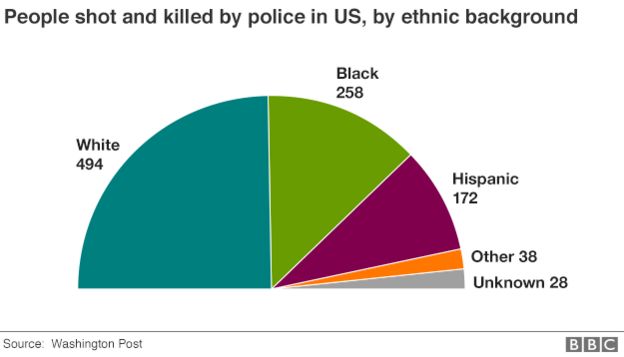
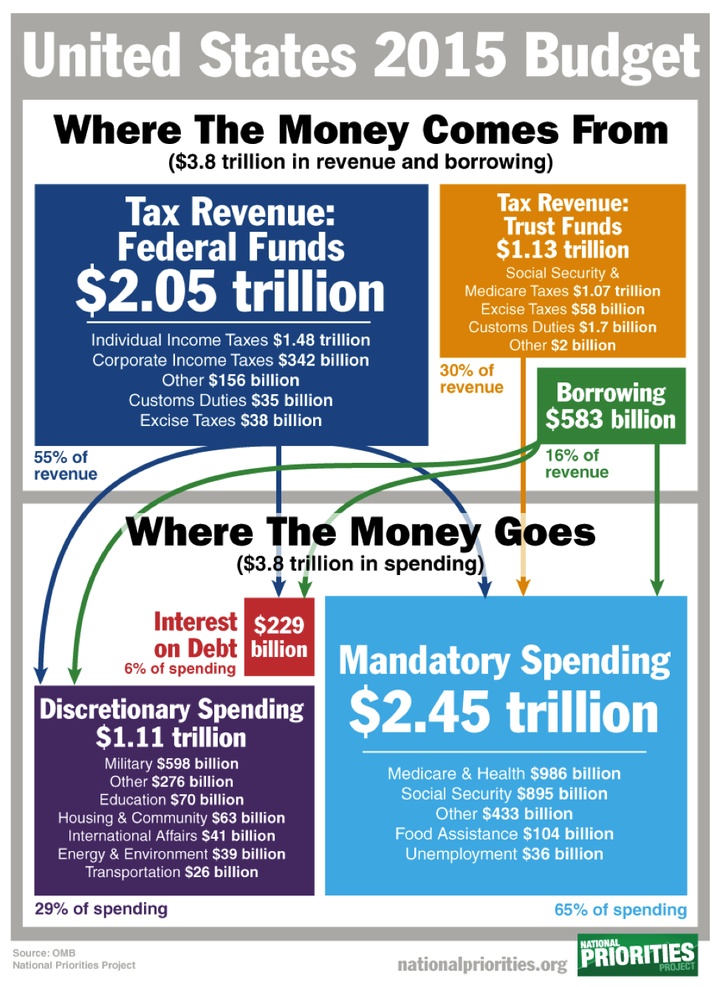
 The Wise Sloth